
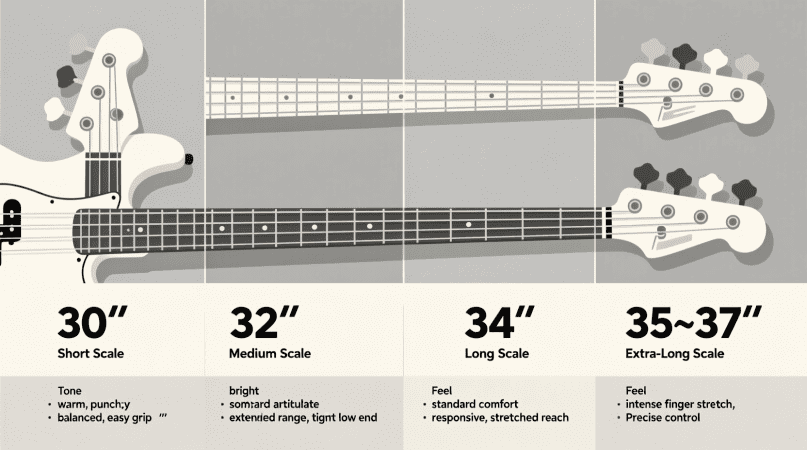
When shopping for a bass guitar—or trying to understand why different basses feel and sound different—one of the most important specs to consider is scale length. A bass scale length chart helps musicians compare short-scale, medium-scale, long-scale, and extra-long scale basses so they can choose the best option for their playing style, tone preferences, and hand size.
This guide breaks down everything you need to know about bass scale lengths, how they affect tone and playability, and how to use a scale length chart to make the right choice.
What Is Scale Length on a Bass Guitar?
The scale length is the distance between the nut and the bridge saddle, which represents the vibrating portion of the string.
This measurement directly affects:
- String tension
- Fret spacing
- Overall neck length
- Tone and sustain
- Comfort and playability
Scale length plays a huge role in how easy a bass is to play and how it sounds across the frequency spectrum.
Whether you’re tuning a violin, guitar, or singing, the online pitch detector allows you to see exact frequencies and correct mistakes instantly.
What Is a Bass Scale Length Chart?
A bass scale length chart is a visual comparison of different bass scale categories. It helps players understand the differences between 30″, 32″, 34″, and 35″+ basses by showing:
- Length measurements
- Tone qualities
- Hand-feel differences
- Common use cases
- Popular bass models for each scale type
This chart is extremely helpful for beginners, buyers, and players switching between different types of basses.
After converting a note to its frequency, you can verify its musical context using the song key finder.
The Four Main Bass Scale Lengths
A bass scale length chart typically includes four main categories:
1. Short Scale Bass (30 inches)
Characteristics:
- Shorter neck and closer fret spacing
- Lower string tension → softer feel
- Warm, rounded tone
- Easier for beginners and smaller hands
Great For:
Beginners, indie, blues, vintage sounds, fingerstyle
Examples:
Hofner Violin Bass, Fender Mustang Bass, Gretsch Junior Jet
2. Medium Scale Bass (32 inches)
Characteristics:
- A balance between short and long scale
- Moderate tension
- Slightly tighter lows than short scale
- Comfortable for most players
Great For:
Jazz, pop, rock, players wanting comfort + clarity
Examples:
Squier Medium Scale Jaguar Bass, Ibanez Talman Medium Scale
3. Long Scale Bass (34 inches) — The Standard
Characteristics:
- Most common bass scale length
- Ideal tension for standard tuning
- Clear, punchy tone
- Widely used in modern music
Great For:
Rock, funk, pop, slap, studio work
Examples:
Fender Precision Bass, Fender Jazz Bass, Music Man StingRay
4. Extra-Long Scale Bass (35–37 inches)
Characteristics:
- Higher tension → tighter low strings
- Better clarity for 5-string and 6-string low B
- Wider fret spacing
Great For:
Metal, progressive rock, extended-range basses
Examples:
Ibanez BTB (35″), Dingwall Combustion/Fanned Fret (37″)
Bass Scale Length Chart (Quick Comparison)
| Scale Type | Length | Feel | Tone | Best For |
|---|---|---|---|---|
| Short Scale | 30″ | Soft, easy | Warm, round | Beginners, retro, indie |
| Medium Scale | 32″ | Balanced | Smooth, controlled | Jazz, studio, comfort |
| Long Scale | 34″ | Standard | Punchy, clear | Most modern styles |
| Extra-Long Scale | 35–37″ | Tight, wide | Deep, defined lows | 5-string/6-string bass |
How Scale Length Affects Tone & Playability
1. String Tension
- Short scale = loose, flexible strings
- Long scale = tighter, more responsive strings
2. Tone
- Short scale → warm, vintage, less bite
- Long scale → bright, punchy, more sustain
- Extra-long → tight low frequencies, ideal for B strings
3. Fret Spacing
- Short scale = closer frets, easier stretches
- Long scale = larger frets, more reach needed
4. Feel & Comfort
Players with small hands often prefer short or medium scale.
Who Should Use Which Scale Length?
Short Scale Players
- Beginners
- People with small hands
- Vintage tone lovers
- Guitarists switching to bass
Medium Scale Players
- Players wanting comfort + clarity
- Jazz, pop, and session bassists
Long Scale Players
- Rock, funk, metal, R&B players
- Slap bass players
- Anyone wanting standard feel
Extra-Long Scale Players
- 5-string or 6-string players
- Low-tuning musicians
- Metal and progressive players
Is a Short Scale Bass Good for Beginners?
Yes — short scale basses are easier to play because:
- Frets are closer together
- Strings require less force
- Neck feels smaller
- Tone is forgiving and warm
Many beginners start with 30″ or 32″ basses before moving to 34″
Final Thoughts
A bass scale length chart is one of the most useful tools for choosing the right bass guitar. Scale length dramatically affects playability, tone, and comfort. By understanding the differences between short, medium, long, and extra-long scales, players can confidently pick a bass that fits their hands, musical style, and tonal goals.
When comparing instruments, this bass guitar tuning chart helps show how different scale lengths affect string tension.
Many players also look at a bass guitar string chart to understand how longer scales change string feel.
To map notes across the fretboard, this bass guitar fingering chart gives a practical reference.
If you want to connect scale length with pitch, this frequency range guide shows where bass notes sit.
For checking intonation on different neck lengths, a real-time pitch tracker is especially useful.
To understand tuning precision, this cents in music article explains small pitch differences.
When recording tests between basses, this audio pitch detection guide lets you analyze each take.
Ornella is a music technology writer and vocal tools specialist at Pitch Detector. She creates practical content around pitch detection, note recognition, vocal analysis, and singing education tools for beginners, singers, and audio creators.