
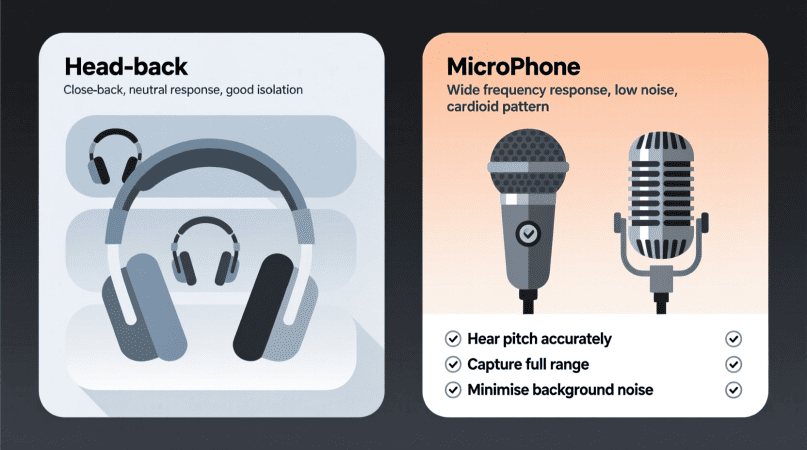
If you’ve ever struggled to stay in tune while practicing, your gear might be holding you back. Using the right headphones and microphone makes pitch training easier because you hear your voice or instrument clearly and your pitch detection tool captures accurate readings.
Below, you’ll find recommendations for headphones and mics that deliver the clarity and reliability you need for effective practice.
Why Headphones and Mics Matter for Pitch Training
- Headphones shape how you hear pitch. Neutral, accurate models help you identify notes without coloration.
- Microphones determine how your pitch detector “sees” your sound. A poor mic can distort or lose the fundamental frequency, causing unstable results.
When both are chosen carefully, your training becomes smoother and more effective.
Best Headphones for Pitch Training
Sennheiser HD 800 S
- Wide soundstage, transparent detail, perfect for ear training.
- Best for advanced vocalists or musicians who want uncompromising clarity.
Sony MDR-7506
- Studio classic, affordable, durable, and very neutral.
- Widely used by vocal coaches and recording engineers.
Beyerdynamic DT 770 Pro
- Closed-back with strong isolation, great if you practice in noisy spaces.
- Smooth sound that won’t fatigue your ears during long sessions.
AKG K240 Studio
- Lightweight, semi-open design for balanced, honest sound.
- A strong option for long daily practice sessions.
Best Microphones for Pitch Training
Shure SM58
- The industry standard for vocals. Rugged, reliable, and accurate enough for everyday training.
- Great choice if you need a mic that can handle live and practice sessions.
Audio-Technica AT2020
- Affordable condenser mic with excellent detail.
- Perfect entry-level mic for singers practicing pitch at home.
Shure SM7B
- Broadcast-quality dynamic mic with smooth, flat response.
- Excellent for vocal training when you want consistent, clear pitch capture.
USB Options (Apogee HypeMiC, AT2020 USB)
- Plug-and-play, no interface required.
- Great for portable setups or beginners who want quality without complexity.
Quick Comparison Table
| Gear Type | Model | Best Feature for Pitch Training |
|---|---|---|
| Headphones | Sennheiser HD 800 S | Ultra-clear detail for serious ear work |
| Sony MDR-7506 | Affordable, neutral, reliable | |
| DT 770 Pro | Comfortable, great isolation | |
| AKG K240 | Balanced, long-session friendly | |
| Microphones | Shure SM58 | Rugged, everyday vocal use |
| AT2020 | Affordable detail, great entry condenser | |
| Shure SM7B | Smooth broadcast-level clarity | |
| USB Mics | Easy setup for beginners |
How to Choose Based on Your Setup
- Budget-friendly practice: Sony MDR-7506 + AT2020 USB.
- Home studio: Open-back headphones + Shure SM7B.
- Portable setup: Closed-back headphones + USB condenser mic.
For a singer-focused approach, this singing range test is a practical option
FAQs
Q: Can I train pitch with regular earbuds?
Yes, but they often color the sound, which makes pitch practice less accurate.
Q: Is a USB mic good enough for training?
Yes. For most singers and learners, a quality USB condenser provides more than enough clarity.
Q: Do closed-back or open-back headphones work better?
Closed-back reduce distractions in noisy environments, while open-back sound more natural for long practice sessions.
Q: Why does my mic make pitch detection unstable?
Low-quality mics often miss the fundamental frequency, leading to flickering readings.
For clearer capture of notes, some singers reference the song key finder before recording.
Improving audio quality can be supported by experimenting with a pitch shifter during practice.
If you want extra insight into your technique, try using the online vocal analyzer tool.
Many learners read unbiased feedback in the 30-day singer review before choosing gear.
Preparing with foundational skills is easier when you explore beginner vocal lessons content.
Understanding basic terms helps beginners start faster with the glossary of pitch and audio terms.
Some users compare offerings by looking at best online singing lessons to complement their equipment choices.
PitchDetector.com is a project by Ornella, blending audio engineering and web technology to deliver precise, real-time pitch detection through your browser. Designed for musicians, producers, and learners who want fast, accurate tuning without installing any software.