
The trombone family includes many instruments, but the bass trombone and tenor trombone are the two most commonly used in modern music. Although they look similar at first glance, they differ significantly in size, sound, valves, range, role, and playability. Understanding these differences helps players choose the right instrument for their skill level and musical goals.
This guide provides a complete, SEO-optimized comparison of bass trombone vs tenor trombone, suitable for students, educators, and professionals.
What Is a Tenor Trombone?
The tenor trombone is the most popular and widely used trombone. It’s commonly the first instrument students begin with and is essential in almost every ensemble.
Key Features
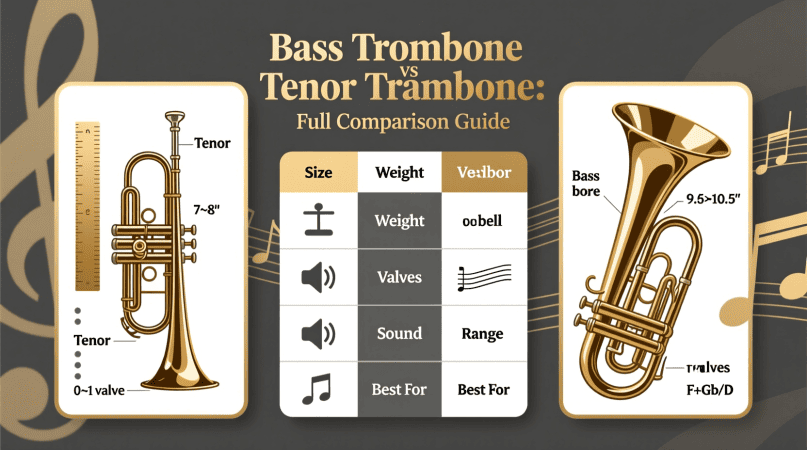
- Medium bore size
- Smaller bell: 7″–8″
- Usually no valve (straight tenor)
- Or one F-attachment valve
- Bright, flexible tone
- Lighter and easier to handle
Where It’s Used
- Concert band
- Symphony orchestra
- Jazz/big band
- Marching band
- Pop and studio music
The tenor trombone is known for its versatility, making it ideal for all-around playing.
Once your file is analyzed, you can determine its musical scale with the song key finder for easier composition.
What Is a Bass Trombone?
The bass trombone is the largest and deepest-sounding trombone. It is used by advanced or professional players who need powerful low-register capabilities.
Key Features
- Larger bore size
- Big bell: 9.5″–10.5″
- Two valves (F valve + Gb/D valve)
- Greater tubing length
- Heavy, dark, resonant tone
- Requires strong airflow
Where It’s Used
- Professional orchestra
- Wind ensembles
- Big bands (bass trombone chair)
- Film scores and low-brass features
The bass trombone provides the booming, foundational low brass sound in modern ensembles.
Bass Trombone vs Tenor Trombone: Key Differences
1. Size & Weight
| Comparison | Tenor Trombone | Bass Trombone |
|---|---|---|
| Bore | Medium | Large |
| Bell Size | 7″–8″ | 9.5″–10.5″ |
| Weight | Light | Heavy |
| Air Requirement | Moderate | High |
Bass trombones are physically larger and significantly heavier, designed for powerful low-frequency resonance. Recording sessions become smoother when the real-time pitch detector ensures every take is in tune.
2. Valve System
Tenor Trombone
- Usually 0–1 valve
- F-attachment extends low range slightly
- Easier for beginners
Bass Trombone
- Always has two valves (F + Gb/D)
- Allows alternate positions
- Essential for extremely low notes
- More complex slide navigation
3. Sound Quality
Tenor Trombone Sound
- Bright
- Clear
- Mellow
- Ideal for solos and melodies
Bass Trombone Sound
- Deep
- Dark
- Powerful
- Intense low-register projection
The bass trombone produces a heavier, darker sound, while the tenor is lighter and more flexible.
4. Range
Tenor Trombone Range
- Best in mid-high register
- Comfortable for fast passages
Bass Trombone Range
- Dominates the low and pedal register
- Reaches extremely low notes with double valves
Bass trombones cover the lowest notes in the brass section, while tenors cover mid to high roles.
5. Musical Roles
In Orchestras
- Tenor: melody, harmony, solos
- Bass: low-end power and foundation
In Jazz / Big Band
- Tenor: lead trombone, improvisation
- Bass: punchy bass lines, low harmonies
In Concert Bands
- Tenor: main trombone voice
- Bass: supports tuba and euphonium voices
Which One Should You Choose?
Choose a Tenor Trombone If:
- You’re a beginner or early intermediate
- You want a versatile instrument
- You prefer lighter weight and easier airflow
- You play jazz, marching band, or general music
Choose a Bass Trombone If:
- You are an intermediate or advanced player
- You want to specialize in low brass
- You enjoy deep, rich tones
- You play orchestra, wind ensemble, or big band
If you want to reverse the calculation, the note-to-frequency converter will map the musical note back to its frequency.
Quick Comparison Table
| Feature | Tenor Trombone | Bass Trombone |
|---|---|---|
| Skill Level | Beginner–Pro | Intermediate–Pro |
| Valves | 0–1 | 2 |
| Tone | Bright & flexible | Dark & powerful |
| Range | Mid–High | Low–Very Low |
| Weight | Light | Heavy |
| Best Genres | Jazz, classical, marching | Orchestral, big band, film music |
Frequently Asked Questions
Is bass trombone harder than tenor trombone?
Yes. Bass trombone requires more air, strength, and valve coordination.
Can a beginner start on bass trombone?
Not recommended. Beginners learn much faster on tenor trombone.
Do orchestras use both types?
Yes. Orchestras typically have two tenor trombones and one bass trombone.
Can tenor trombones play the same notes as bass trombones?
They can reach some of the same notes, but bass trombones can play lower and with more power.
Final Thoughts
The tenor trombone is the versatile, accessible, and flexible standard instrument for most musicians.
The bass trombone is the deeper, more powerful low-range instrument used in advanced and professional settings.
Both instruments are essential in modern music, and choosing the right one depends on your skill level, airflow strength, and musical ambitions.
- To compare how each instrument sits in the spectrum, this instrument frequency range guide shows their usable pitch bands.
- Many players reference a bass trombone slide position chart to see how low notes are reached.
- For visualizing fingerings and valve use, this bass trombone slide chart adds practical context.
- When checking intonation differences, a real-time pitch tracker gives immediate feedback.
- To understand tuning precision, this cents in music guide explains small pitch offsets.
- If tuners show extra notes, these harmonics explained clarify why that happens.
- For technical insight into low-brass analysis, this FFT pitch detection guide explains how tones are measured.
PitchDetector.com is a project by Ornella, blending audio engineering and web technology to deliver precise, real-time pitch detection through your browser. Designed for musicians, producers, and learners who want fast, accurate tuning without installing any software.