
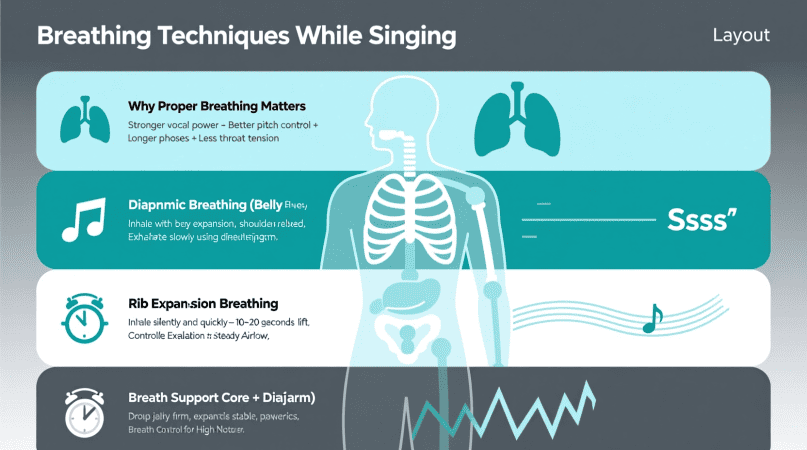
Breathing is the foundation of every great vocal performance. Whether you’re a beginner or an experienced vocalist, mastering breathing techniques while singing can significantly improve your tone, pitch, stamina, and vocal control. Good singing starts with good breathing—without proper technique, even the strongest voices struggle.
This guide covers the best and most effective breathing techniques singers should practice daily to unlock their full vocal potential.
You can quickly check if your notes are sharp or flat using the PitchDetector, which analyzes sound in real time.
What Are Breathing Techniques for Singing?
Breathing techniques while singing are methods that help singers control airflow, strengthen the diaphragm, and support their voice efficiently. These techniques allow you to produce a stable, powerful sound without straining the throat.
They focus on:
- Diaphragmatic breathing
- Controlled exhalation
- Rib expansion
- Silent inhalation
- Breath support
- Quick breathing between phrases
- Airflow management for high notes
These techniques improve both vocal quality and vocal health.
Why Proper Breathing Is Essential for Singers
Good breathing technique helps singers:
- Sing longer phrases without running out of air
- Hit high notes with ease
- Maintain stable pitch
- Prevent tension in the throat and shoulders
- Improve vocal tone and resonance
- Strengthen vocal power without shouting
- Increase endurance during long performances
Without proper breath support, singers may struggle with cracking, gasping, or vocal fatigue.
1. Diaphragmatic Breathing (Belly Breathing)
This is the most important breathing technique for all singers.
How to Do It:
- Place one hand on your belly.
- Inhale slowly through your nose.
- Allow your belly—not your chest—to expand outward.
- Keep shoulders relaxed and still.
- Exhale steadily while keeping your belly firm.
Why It Works:
- Strengthens the diaphragm
- Supports a fuller, richer sound
- Improves airflow and tone stability
2. Rib Expansion Breathing (Intercostal Breathing)
Professional singers keep their ribs expanded during singing.
How to Do It:
- Inhale deeply and expand ribs sideways.
- Hold the rib expansion gently as you sing.
- Exhale slowly without collapsing the chest.
Benefits:
- Provides consistent breath support
- Gives more control over long phrases
- Prevents chest and shoulder tension
3. Silent Inhalation (Quick, Quiet Breaths)
Singers should inhale silently to avoid tension.
How to Do It:
- Breathe in quietly through your mouth or nose
- Keep the jaw loose
- Avoid loud gasps
- Let air fall naturally into the diaphragm
Why It Matters:
- Reduces vocal strain
- Improves phrasing
- Helps during fast lyric transitions
4. Controlled Exhalation (Steady Airflow)
Singing requires a smooth and consistent flow of air.
How to Practice:
- Take a deep diaphragmatic breath
- Exhale with a long “Sssss” sound
- Aim for 10–30 seconds of steady airflow
Benefits:
- Enhances pitch stability
- Builds breath stamina
- Strengthens airflow control
5. Breath Support (Diaphragm + Core Engagement)
Breath support means controlling air pressure with your diaphragm and core—not your throat.
Signs of Good Support:
- Belly stays firm during singing
- Tone is steady and strong
- High notes feel easier
- Chest does not collapse
Benefits:
- Allows powerful singing without strain
- Helps sustain long notes
- Smooths transitions between registers
You can compare your real-time results with our pitch accuracy tests to see how precise the detection truly is.
6. Quick Breath Technique (Fast Breaths Between Lyrics)
Many songs give singers less than a second to breathe.
How to Do It:
- Quickly drop the jaw
- Expand ribs instantly
- Inhale silently
- Support again immediately
This allows you to maintain vocal flow during fast-paced songs.
7. Breath Technique for High Notes
High notes require less air, but better control.
Technique:
- Maintain rib expansion
- Use slower airflow
- Keep throat open
- Engage the diaphragm
This prevents pushing or shouting through high notes.
8. Phrasing Technique (Breathing at the Right Time)
Phrasing is all about breathing with the music.
How to Practice:
- Mark breath spots in lyrics
- Avoid breathing mid-word
- Use natural pauses
- Take fast, efficient breaths between lines
Good phrasing improves musical flow and professionalism.
Daily 5-Minute Breathing Routine for Singers
Do this before every practice session:
- 1 min – Diaphragmatic breathing
- 1 min – Rib expansion
- 1 min – Long “S” exhale
- 1 min – Lip trills (airflow+voice)
- 1 min – Silent quick breaths
This routine quickly strengthens breath support.
The detection process becomes clearer when you explore the pitch detection methodology behind our accuracy benchmarks.
Signs Your Breathing Technique Is Improving
You’ll be able to:
- Hold long notes without shaking
- Sing high notes more easily
- Sing phrases without gasping
- Maintain steady pitch
- Sing louder without straining
- Improve vocal stamina
Frequently Asked Questions
Should I breathe through my nose or mouth while singing?
Use whichever is quickest and quietest—often a combination of both.
Does breathing from the diaphragm really help?
Yes. It provides the best support and prevents throat tension.
How long should I practice breathing techniques?
5–10 minutes per day is enough to see improvement.
Can this help me sing higher?
Yes—breath support makes high notes easier and safer.
Final Thoughts
Proper breathing techniques while singing are essential for every vocalist. From diaphragmatic breathing to breath support, silent inhalation, rib expansion, and controlled airflow—mastering these techniques will help you sing with more power, stability, and confidence.
Consistent practice leads to:
- Better tone
- Stronger support
- Healthier vocals
- More professional singing
Many singers pair breathing drills with a beginner vocal warm-up to activate proper support.
To see how breath affects pitch in real time, a voice pitch analyzer provides instant feedback.
When practicing sustained notes, a live pitch tracker helps keep tones steady.
For improving control, these range expansion exercises connect airflow with pitch.
If notes drift, these intonation fixes explain how breathing plays a role.
To understand small tuning shifts, this cents in music guide adds precision.
For deeper insight into how the ear hears sustained tones, this pitch perception article is helpful.
Ornella is a music technology writer and vocal tools specialist at Pitch Detector. She creates practical content around pitch detection, note recognition, vocal analysis, and singing education tools for beginners, singers, and audio creators.